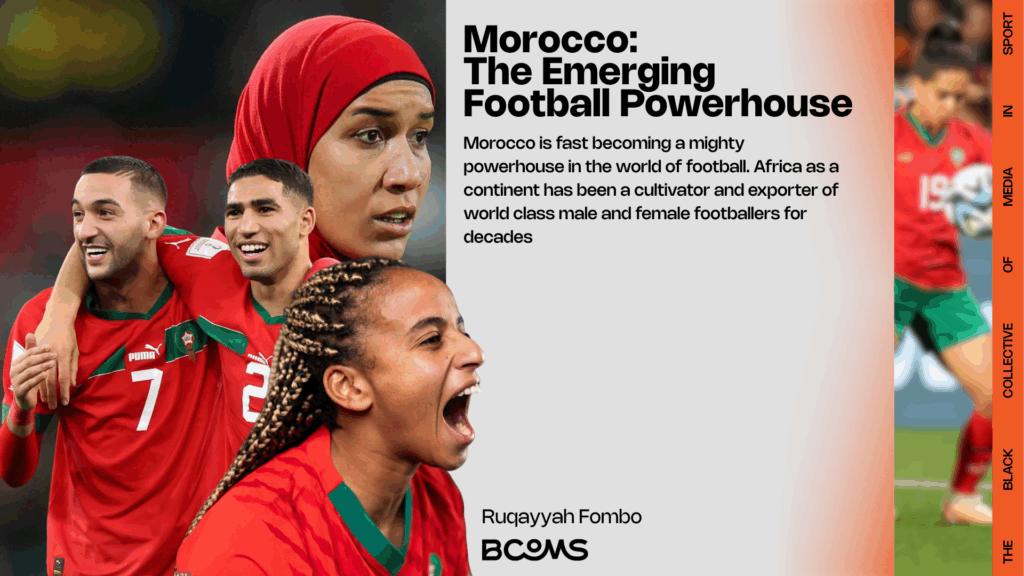
Major names including Achraf Hakimi, Sadio Mane, Mohammed Salah, Asisat Oshoala, Barbra Banda and Ghizlane Chebbak have all become international names playing for league and country. The North African powerhouse is transcending this and fast becoming a key player across a range of realms on the pitch and beyond.
In order for a country to become a football powerhouse it needs to be able to cultivate talent in quality academies and domestic teams, export talent that carries the national legacy on the world stage, and position itself as a host country for major tournaments. Morocco has been able to successfully do all three. Historically football has been extremely eurocentric because the sporting infrastructure, money and opportunities for player progress have been unrivalled for many years by nations outside of Europe. Morocco is changing this reality and putting the continent of Africa on the map.
The football powerhouse has recently hosted large scale tournaments including the under 23 AFCON & FIFA Club World Cup in 2023 and WAFCON in 2024 & 2025. In the coming years, Morocco is expected to host the 2026 AFCON and WAFCON tournament, the 2029 U17 women’s world cup, the 2029 FIFA Club World Cup and one of three hosts for the 2030 World Cup. The country recently hosted the inaugral Future Media Initiative event in Rabat with over 200 participants from 100 countries in attendance. The event aimed to bridge the gap between traditional modern media, with an emphasis on up and coming content creators who harness the power of social media to innovate media output as we know it.
Moroccan players are dominating global leagues with Zakaria Aboukhlaal at Torino in Serie A, Achraf Hakimi at PSG in Ligue 1, Chemsdine Talbi at Sunderland in the Premier League and Brahim Diaz at Real Madrid in LaLiga. Domestic talent is also doing well with Morocco recently wininning the African Nations Championship which only features players from the country’s national league. The victory solidified the prowess of Morccan talent within and beyond the country itself.
Football training infrastructure has been built to rival some of the best training grounds in the world, with Rabat being the beating heart. In 2010, the state of the art Mohammed VI football academy was built to cultivate their domestic talent, as well as those in the diaspora who represent their country internationally. The country has also invested tens of millions in world-class facilities to cultivate and revolutionise women’s football. World-renowned football teams Barcelona and PSG have both buit academies in the country to cultivate the next generation of football players from Morocco.
The tide is changing in the world of football. Morocco is welcoming the world of football fans with its professionalism, world-class hospitality and incredible footballing talent.